Biosafety Cabinet Decontamination: Methods, Risks, and What’s Changing
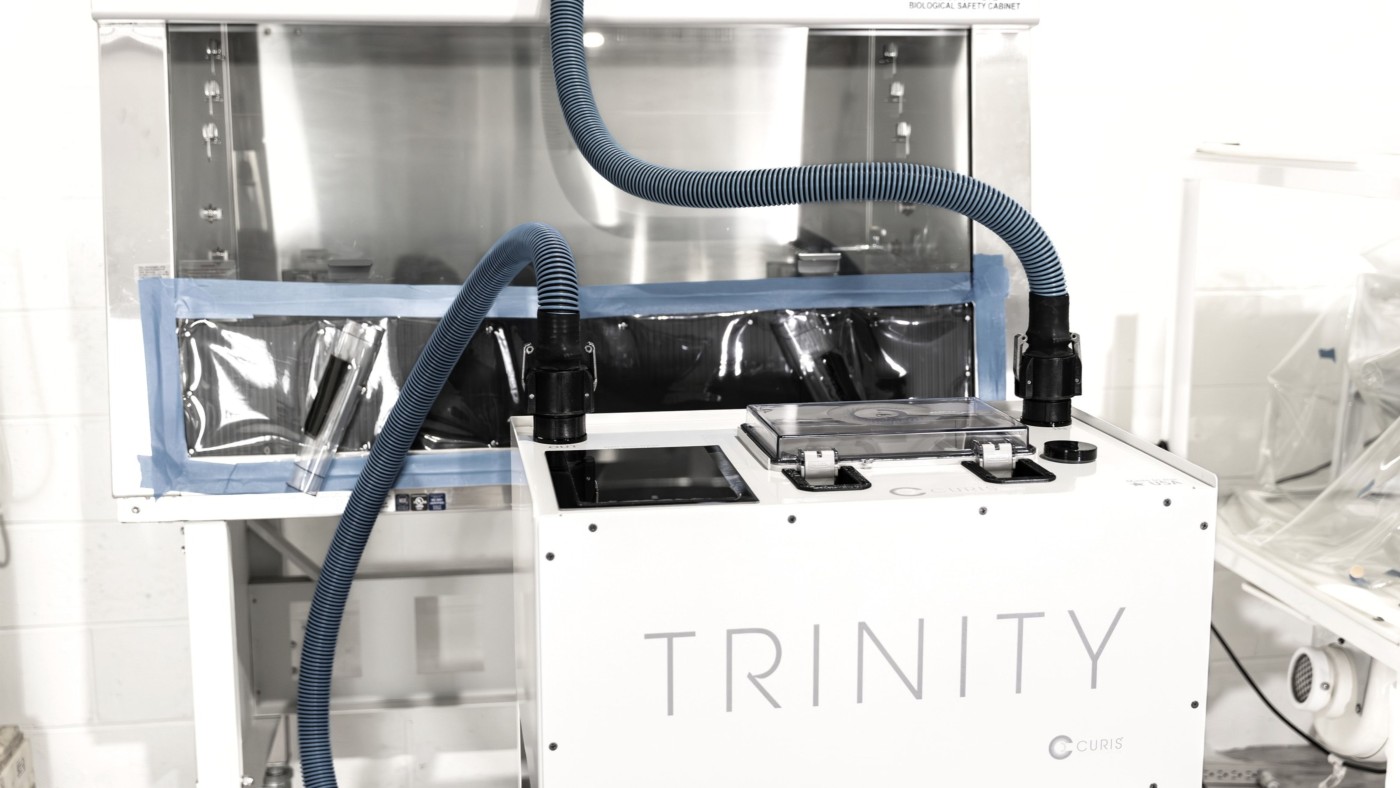
Biosafety cabinets are among the most critical pieces of equipment in any lab. They protect personnel, products, and the environment from biological hazards during routine work. But when it comes to decontaminating them—whether for certification, spill response, relocation, or routine fumigation—the process hasn’t always kept up with the science.
For decades, formaldehyde gas fumigation has been the default. It works—but at a significant cost to safety, downtime, and operational simplicity. That’s starting to change.
Key Takeaways
- Formaldehyde fumigation, while effective, introduces serious safety and logistical challenges that many labs are moving away from. Similarly, high-concentration 35% vaporized hydrogen peroxide (VHP / VPHP) also poses safety and material compatibility concerns.
- Low-concentration 7% hybrid hydrogen peroxide (HHP™) biodecontamination offers sporicidal efficacy at dramatically lower concentrations—without the toxicity or risk profile of legacy methods.
- Published validation data now confirms greater than 6-log sporicidal efficacy of HHP™ decontamination inside BSCs, including hard-to-reach areas like plenums and HEPA filters.
- Three leading BSC manufacturers have approved and validated hydrogen peroxide–based decontamination using Hybrid Hydrogen Peroxide™ technology.
Why Is BSC Decontamination So Difficult?
Biosafety cabinets aren’t simple boxes. A Class II cabinet circulates air through HEPA filters, plenums, and internal ductwork that surface wipes and liquid disinfectants simply cannot reach. The areas behind the work surface, inside the blower housing, above the supply HEPA, and throughout the exhaust system are all potential reservoirs for contamination—and all are inaccessible to manual cleaning.
That’s exactly why fumigation-based methods exist. Gas or vapor-phase agents can reach every surface and internal cavity. The question is: which agent, at what cost?
How Do Current Methods Compare?
Formaldehyde
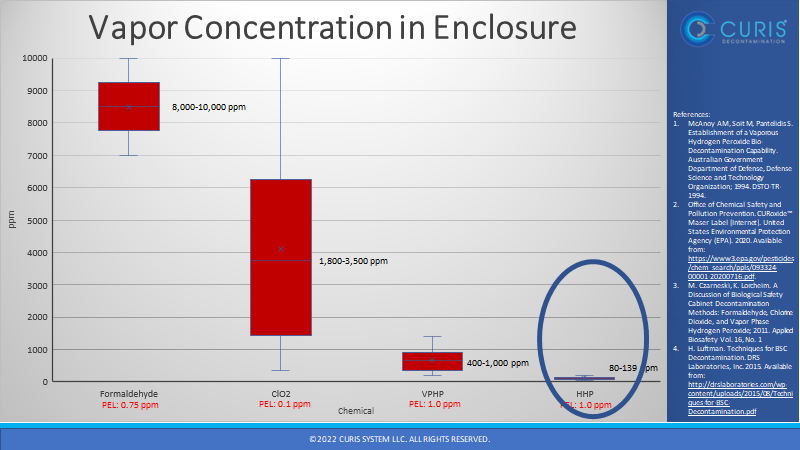
Formaldehyde gas has been used for BSC decontamination for over 50 years. It achieves sporicidal kill at concentrations between 8,000 and 10,000 ppm—but it comes with serious drawbacks. Formaldehyde is classified as a known human carcinogen by the International Agency for Research on Cancer. It requires lengthy neutralization with ammonia, extended aeration periods, and strict personnel safety protocols. Many facilities are actively seeking alternatives.
 Chlorine Dioxide
Chlorine dioxide (ClO₂) fumigation typically operates at 1,800 to 2,500 ppm. While effective, it can be highly corrosive to metals and electronics, making it a poor fit for biosafety cabinets housing sensitive instruments—flow cytometers, centrifuges, and analytical equipment among them. And because ClO₂ is a true gas rather than a vapor, the same penetrating ability that makes it effective inside a treatment space also increases the risk of leakage into adjacent areas, creating potential exposure hazards for staff outside the decontamination zone.
Vaporized Hydrogen Peroxide
Hydrogen peroxide vapor can achieve equivalent sporicidal efficacy at a fraction of the concentration. Conventional high-concentration VHP / VPHP systems operate at 400 to 1,000 ppm using 35–59% hydrogen peroxide solutions. Newer low-concentration approaches—like those using 7% hydrogen peroxide—work at even lower levels, typically 80 to 130 ppm inside a sealed BSC, well below the EPA-registered ceiling and far closer to the OSHA permissible exposure limit of 1 ppm after aeration.
The result is a process that’s sporicidal without the toxicity, corrosion, or operational complexity of legacy methods.
What Does the Validation Data Show?
CURIS System has partnered with leading manufacturers to publish three independent studies validating Hybrid Hydrogen Peroxide™ technology for BSC decontamination. Here are the highlights.
Simultaneous Room and BSC Decontamination
A 2018 study tested whether a laboratory and an operational biosafety cabinet could be decontaminated simultaneously using hybrid hydrogen peroxide (HHP™) technology. The answer: yes. Using Geobacillus stearothermophilus biological indicators (approximately 1 × 10⁶ spore population each), the study confirmed greater than 6-log sporicidal efficacy across 184 of 193 carrier positions—including locations on the work surface, inside the cabinet plenums, and at the HEPA filters.
The key finding: when the BSC remained operational during the cycle, vapor penetrated the cabinet’s internal airflow pathways and reached every tested surface—including areas behind and above the HEPA filters that no manual method could touch.
Decontamination of Instruments Inside the BSC
A 2022 validation protocol tested the CURIS TRINITY™ system on a cell sorter housed inside a Baker biosafety cabinet. Using 42 biological indicators across 14 internal positions—including the sample chamber, blower housing, and exhaust filters—the study demonstrated greater than 6-log sporicidal efficacy. Material compatibility testing over 15 consecutive cycles confirmed the BSC and instrument remained fully functional.
Multi-Manufacturer BSC Validation
The most comprehensive study tested the CURIS TRINITY™ protocol across biosafety cabinets from three leading manufacturers—The Baker Company, NuAire, and Germfree—using both 4-foot and 6-foot Class II cabinets. Two containment methods (taping and tenting) were validated across 21 test cycles. The results:
- 755 biological indicators tested. 755 passed. That’s 100% sporicidal efficacy across every manufacturer, every cabinet size, and every containment method.
- The process reached plenums and both HEPA filters in every configuration tested.
All three manufacturers have approved CURIS hydrogen peroxide–based decontamination for their biosafety cabinets.
Why Material Compatibility Matters
Any decontamination agent has to do more than kill spores—it has to leave the equipment intact. Chlorine dioxide’s corrosive profile has made it a poor fit for cabinets housing sensitive instruments. High-concentration VHP systems can also stress seals, gaskets, and electronics over repeated cycles.
The low-concentration approach (7% hydrogen peroxide, 80–130 ppm operating range) has demonstrated excellent material compatibility across extended testing, with BSCs and internal instruments remaining fully functional after repeated decontamination cycles. That matters for labs running routine fumigation schedules—not just one-time decommissioning events.
What Should You Consider for Your Facility?
If your lab still relies on high-consequence legacy fumigation or is evaluating alternatives, here’s what to look for:
- Sporicidal efficacy data. Ask for published validation studies—not just marketing claims. Look for biological indicator data with defined spore populations and log-reduction targets.
- HEPA filter penetration. Is the method effective through the internal plenums and HEPA filters? If not, you’re leaving the most contamination-prone areas untouched.
- Material compatibility. Verify that the agent won’t degrade components—such as sensitive electronics, optics, or sensors—over repeated cycles.
- Manufacturer approval. Has the BSC manufacturer validated and approved the method for use with their cabinets? This matters for warranty and certification compliance.
- Cycle time and complexity. How long does the process take? Does it require manual neutralization, aeration monitoring, or complex setup?
Access the Full Studies and Webinar
CURIS System has published the complete validation studies and a recorded webinar walking through the data, protocols, and results. If you’re evaluating BSC decontamination methods for your facility, these are worth reviewing.
Frequently Asked Questions
Can Hybrid Hydrogen Peroxide™ vapor really reach inside BSC plenums and HEPA filters?
Yes. Published validation data confirms greater than 6-log sporicidal efficacy inside BSC plenums and through HEPA filters when using HHP™ technology.
Is hydrogen peroxide decontamination approved by BSC manufacturers?
Three leading biosafety cabinet manufacturers—The Baker Company, NuAire, and Germfree—have approved and validated hydrogen peroxide–based decontamination using Hybrid Hydrogen Peroxide™ technology for their Class II cabinets.
Does hydrogen peroxide decontamination damage BSC components or instruments?
Low-concentration hydrogen peroxide (7% solution, 80–130 ppm operating range) has demonstrated excellent material compatibility in testing that included 15 consecutive decontamination cycles. BSCs and internal instruments remained fully functional throughout.
What’s the difference between high-concentration and low-concentration hydrogen peroxide decontamination?
Conventional VHP systems use 35–59% hydrogen peroxide solutions and operate at 400–1,000 ppm. Low-concentration systems use a 7% solution and operate at 80–130 ppm—achieving equivalent sporicidal efficacy with a significantly lower chemical load and risk profile, no harmful residues, and a faster path to re-entry below occupational exposure limits.