5 Benefits of Hydrogen Peroxide Decontamination for Cleanrooms
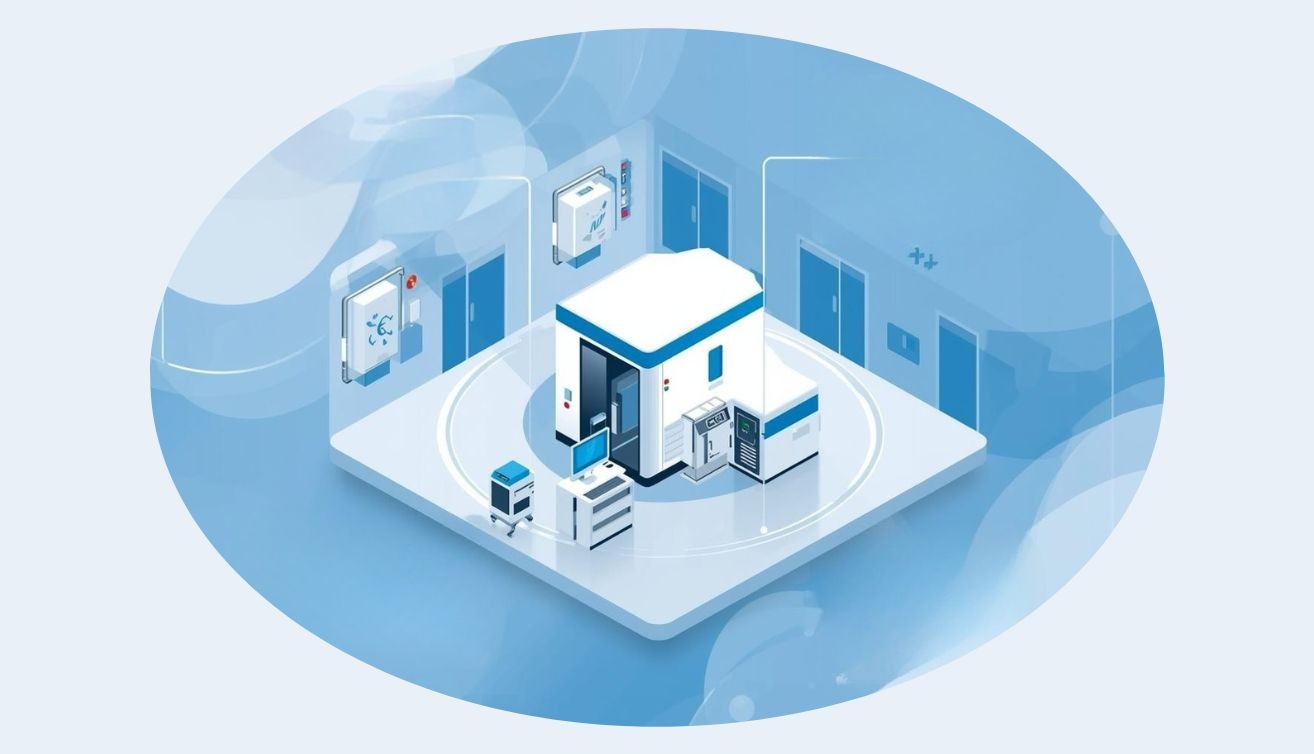 Cleanroom Biodecontamination You Can Trust
Maintaining the integrity of cleanrooms isn’t just a regulatory requirement—it’s the foundation of safe pharmaceutical production, biotechnology research, and medical device manufacturing. In such critical environments, cleanroom biodecontamination must be effective, consistent, and fully validated. That’s where advanced disinfection solutions like those from CURIS System make all the difference.
Prefer to watch instead of read? Here's a full video of this article.
CURIS’ patented Hybrid Hydrogen Peroxide™ (HHP™) vapor technology enables pharmaceutical and cleanroom facilities to meet or exceed Annex 1, cGMP, and FDA expectations. By extending the aseptic barrier not only within isolators, but also across material airlocks (MALs), transfer hatches, and entire cleanroom spaces, CURIS ensures full spatial efficacy where it matters most.
For a full overview of our cleanroom capabilities, visit the Cleanroom Decontamination page.
- Reduced Downtime
CURIS’ low-concentration HHP™ vapor system achieves faster aeration than traditional biodecontamination agents. Whether you're treating isolators, MALs, or underdeck areas, faster cycle times and quicker return-to-safe levels mean less downtime for production and testing. In fact, CURIS systems have been shown to offer up to 4.8x faster recovery from outgassing compared to high-concentration hydrogen peroxide systems.
Result: Streamlined workflows, increased facility utilization, and reduced bottlenecks.
-
Enhanced Safety & Material Compatibility
Legacy decontamination methods such as formaldehyde, ethylene oxide, and chlorine dioxide (ClO₂) bring significant safety and material compatibility risks. ClO₂, in particular, has been shown as corrosive to HEPA filters, stainless steel, gaskets, and sensitive electronics—and requires additional neutralization and downtime.
CURIS eliminates those risks with a 7% HHP™ solution that is:
-
- Proven effective with >6-log sporicidal reduction
- Safe for sensitive equipment and materials
- Non-carcinogenic and leaves no harmful residues
Combined with remote activation and patented door lock safety controls, CURIS protects both people and processes across even the most complex cleanroom layouts.
-
Full-Facility Compatibility—Not Just Isolators
Decontamination solutions should address more than just isolators or biosafety cabinets. Annex 1 and current cGMP guidance now emphasize the need for validated sporicidal treatment across the full contamination pathway—including MALs, pass boxes, filter housings, RABS, and entire cleanroom suites.
CURIS systems deliver automated treatment cycles via portable units or integrated nozzle systems, offering consistent and uniform disinfection throughout:
-
- Material airlocks
- Critical cleanroom surfaces and underdeck spaces
- Cell sorters, lyophilizers, depyrogenation tunnels
- Sensitive equipment areas where manual wipedowns fall short
CURIS also offers a fully automated, integrated dual-delivery biodecontamination system that enables faster, safer decontamination of MALs, pass-throughs, and smaller transfer spaces in addition to larger spaces. This system pairs:
-
-
- CURIS HHP™ for optimal delivery and validated efficacy in material airlocks
- CURIS Rapid Vapor™ for targeted, quick-turn disinfection of smaller spaces like pass boxes
This system is already trusted by leaders like Boehringer Ingelheim, among others, who use it to support high-throughput, inspection-ready operations.
📍 Read more on the Boehringer Ingelheim Study & CURIS whitepapers
-
-
Regulatory Alignment & Validated Performance
CURIS cleanroom solutions are designed with compliance at the core. At a minimum, every cycle logs dwell time, operator ID, and system status—delivering audit-ready documentation.
With CURIS, facilities meet:
-
- EU GMP Annex 1 expectations for automation, validation, and full-surface coverage
- cGMP requirements for standardized, reproducible disinfection cycles
- FDA expectations for data-driven risk mitigation, minimizing contamination events that lead to Form 483 observations or warning letters
These features also support the goals of Pharma 4.0, helping facilities adopt fully automated, sensor-integrated systems that align with ALCOA+ principles for data integrity. CURIS' integrated software and data feedback systems are designed to meet the evolving expectations of digitally enabled, inspection-ready environments.
-
Proven, Validated Efficacy
CURIS HHP™ vapor has demonstrated >6-log sporicidal efficacy even in hard-to-reach spaces, including isolator gloves, IVC filters and cages, and interstitial spaces. This uniform coverage surpasses what wipedown protocols or manual spraying can reliably achieve.
Facilities can choose from:
-
- Mobile systems (e.g., CURIS 3) for portable, whole-room disinfection
- Partially integrated systems with quick-connects to dedicated MALs or chambers
- Fully integrated turnkey systems for complete facility biodecontamination
Why Hydrogen Peroxide Outperforms Other Methods
When compared to other methods, hydrogen peroxide vapor is increasingly favored for cleanrooms:
- Formaldehyde and EtO are toxic, carcinogenic, and require long aeration times
- ClO₂ poses acute toxicity risks, degrades cleanroom materials, and complicates workflows with required neutralization
- Manual wipedowns lack consistency, are time-consuming, and often miss critical areas
CURIS' 7% HHP™ delivers effective, validated, and safer sporicidal treatment across cleanroom zones—from R&D labs to cGMP production lines.
Cleanrooms Demand More Than Clean Surfaces—They Demand Certainty
With material-safe chemistry, validated automation, and full documentation, CURIS brings confidence back to cleanroom biodecontamination. Whether you’re preparing for inspection, scaling production, or preventing cross-contamination in high-risk spaces, CURIS has the proven tools to support your team and compliance goals.
Let’s upgrade your biodecontamination strategy.
Talk to a CURIS SME today to explore your cleanroom needs.