Beyond Triple Clean: Why Your Deep-Clean Protocol Deserves a Defined Framework
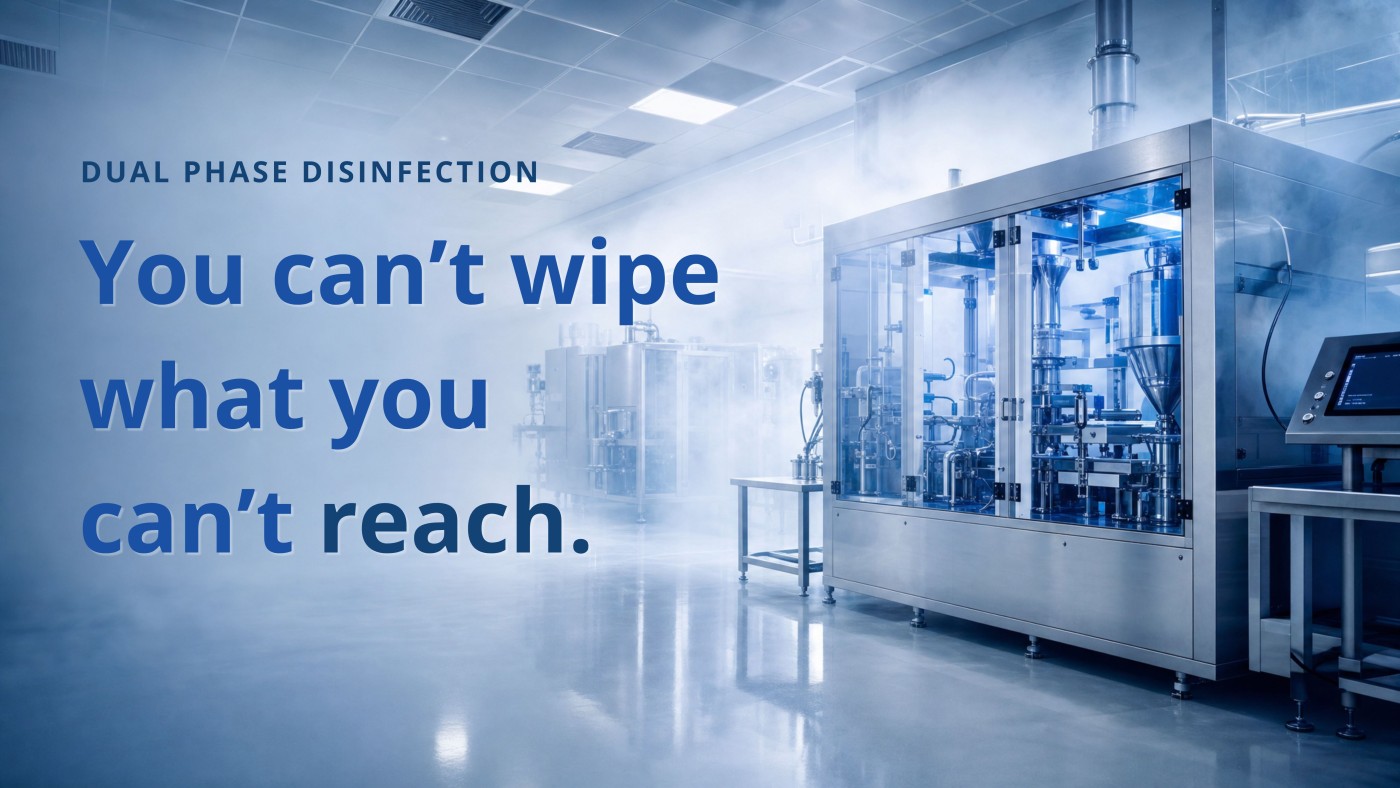
Beyond Triple Clean: Why Your Deep-Clean Protocol Deserves a Defined Framework
Ask a contamination control specialist how they deep-clean a classified space and you’ll likely hear the same two words: triple clean. It’s become shorthand for thoroughness—a signal that a facility takes contamination seriously.
Here’s what’s easy to miss: “triple clean” is an industry convention, not a regulatory term.
It doesn’t appear in Annex 1. It isn’t defined in FDA guidance. No regulatory body specifies what a triple clean consists of, how it should be validated, or what efficacy it must achieve. It emerged as a practical, good-faith response to rising regulatory expectations—and it’s been carried forward by tradition because, for a long time, manual wiping was the best tool available.
That commitment is real. The question worth asking is whether the framework around it still reflects what the science—and the regulations—now support.
What Triple Clean Set Out to Do
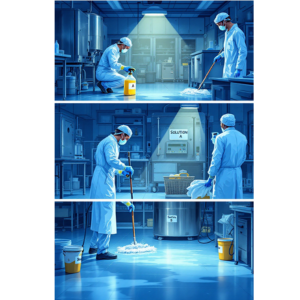 The intent behind triple clean is sound. Layering multiple passes with alternating chemistries reflects a genuine effort to reduce bioburden across a space. A typical protocol runs five or more manual steps performed by gowned operators across every accessible surface.
The operative word is accessible. Manual wiping can only reach what a hand can reach. It is also laborious, time-consuming, and inconsistent by nature—the result depends on the operator, the day, and the surface. Behind fixed equipment, above ceiling tiles, inside HEPA housings, along seams and gaskets—these are surfaces that matter for contamination control, and they’re the ones a wipe reaches last, if at all. That isn’t a failure of effort; it’s a limit of the method.
The Surfaces No One Can Reach
For some equipment, this isn’t a matter of diligence—it’s geometry. An isolator has internal pathways and enclosed spaces that no hand and no wipe will ever consistently reach. It’s often the first thing sterile manufacturers raise: when sites ask about whole-room fumigation, the reason they lean in is rarely a spec sheet. It’s that they have places people just cannot reach, and they want a method that does.
A Two-Phase Framework, Each Step with a Defined Role
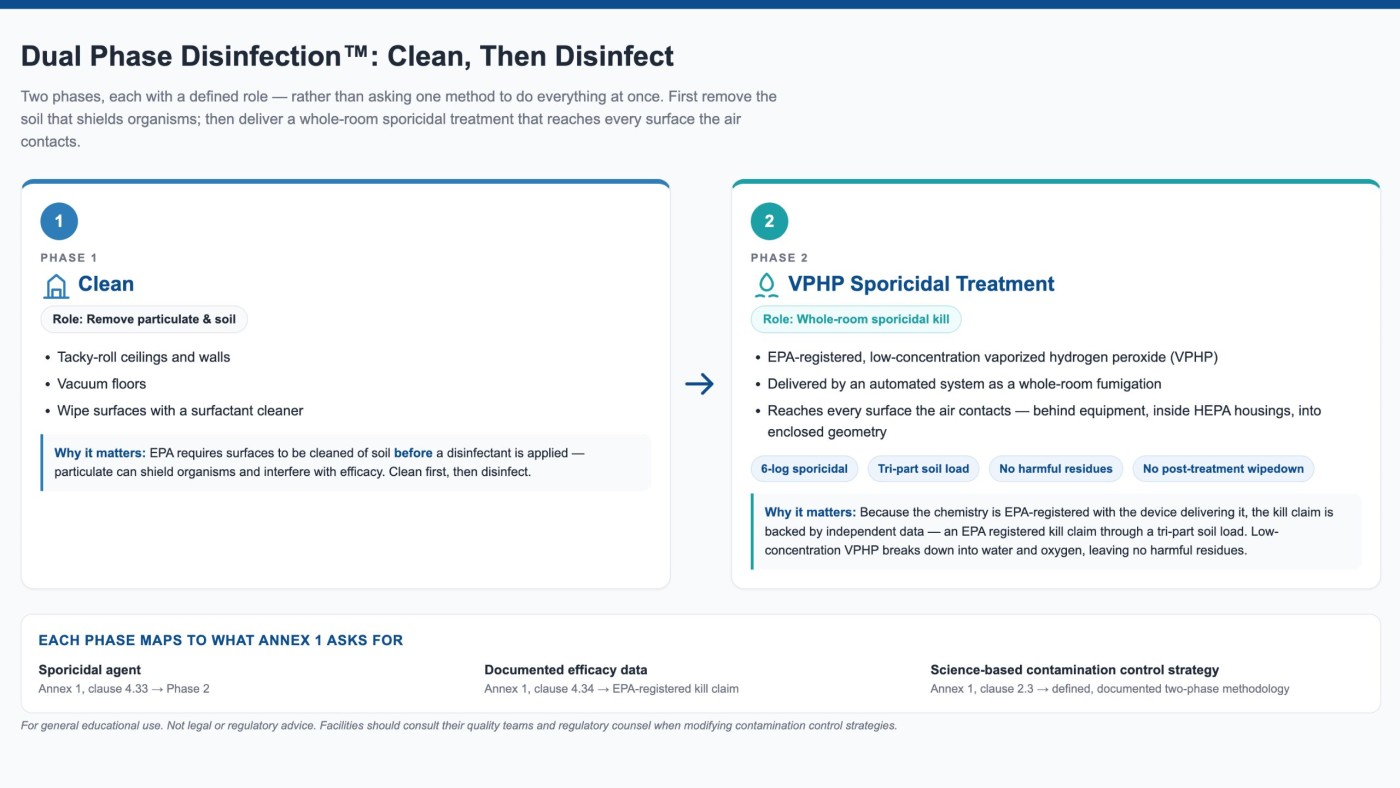
CURIS System developed the Dual Phase Disinfection™ (DPD™) framework to give each part of the process a clear, purpose-built role.
 Phase 1: Cleaning
First, a targeted cleaning step removes particulate and soil—tacky rolling ceilings and walls, vacuuming floors, wiping surfaces with a surfactant cleaner. This isn’t optional housekeeping. EPA requires surfaces to be cleaned of soil before a disinfectant is applied, because particulate can shield organisms and interfere with efficacy. Clean first, then disinfect.
Phase 2: VPHP Sporicidal Treatment
With surfaces prepared, an EPA-registered, low-concentration vapor-phase hydrogen peroxide (VPHP, aka vaporized hydrogen peroxide or VHP) is delivered throughout the enclosed space by an automated system—a whole-room fumigation that reaches every surface the air contacts.
Walls, ceilings, floors, behind equipment, inside HEPA housings, into the enclosed geometry a wipe never touches—coverage isn’t limited by operator reach.
Because the chemistry is EPA-registered with the device delivering it, the kill claim is backed by independent efficacy data and federally approved: a six-log reduction through a tri-part soil load, the EPA standard for vapor-phase sporicides. And because low-concentration VPHP breaks down into water and oxygen, it leaves no harmful residues—so no post-treatment wipedown is required.
Two phases. Clean, then disinfect. Each does exactly what it was designed to do, rather than asking one method—and one operator—to do everything at once.
What Regulators Actually Require
Annex 1’s 2022 revision calls for sporicidal agents (4.33.), documented efficacy data (4.34, 4.36), and a science-based contamination control strategy (CCS) (2.3, 2.5). It does not call for a triple clean.
A two-phase approach maps directly to those expectations: EPA-registered sporicidal efficacy with a documented six-log reduction, a defined methodology, and total surface coverage that accounts for the full environment—not only the surfaces a wipe can reach. For facilities operating under both FDA cGMP and Annex 1, that consistency is easier to document and defend. It’s also worth being loud and proud about one detail: the chemistry is EPA-registered and federally recognized—a compliance anchor, not a footnote.
When the Triple Clean Isn’t Getting You There
There’s a practical version of this problem, too. Some facilities run a triple clean—then run it again, and again, because the environmental monitoring readings still won’t come back where they need to be. Paying a cleaning crew to repeat the same manual process three or four times to chase an EM result is expensive, slow, and a sign the method has hit its ceiling. A defined two-phase framework changes the equation: clean once, then let a validated sporicidal process do the work the wipe couldn’t.
From Convention to Framework
Triple clean became the default because it represented real diligence in an era when manual wiping was the primary option. The DPD™ framework builds on that same intent and gives it structure: a defined sequence, a documented standard, and a regulatory rationale that holds up to scrutiny.
How to Implement
And because it’s a framework rather than a single product, it meets you wherever you operate.
- Built-In: Dual Phase Disinfection can be built into an airlock to replace standard wipe-down procedures.
- Biodecontamination Service: It can be outsourced to a service to help you pass EMPQ with a faster turnaround.
- In-House DIY: Or it can be brought in-house with portable fumigation systems your own team controls. Same methodology, three ways to put it to work.
If a triple clean is still the backbone of your deep-cleaning protocol, let’s talk. You’ll see what low-concentration VPHP looks like in your environment—and how the move from convention to a defined, science-based framework works in practice.
This post introduces Dual Phase Disinfection™ as a methodology developed by CURIS System and addresses general contamination control principles. It is not legal or regulatory advice. Facilities should consult their quality teams and regulatory counsel when modifying contamination control strategies.
Sources:
EU GMP Annex 1, Manufacture of Sterile Medicinal Products (C(2022) 5938 final